Honoring the Land and Reclaiming Food Sovereignty: A New Partnership with the Ramapough Munsee Lenape Nation

TICC is proud to support a transformative collaboration led by the Ramapough Mountain Indians, Inc. that will establish a Community Teaching and Learning Garden to strengthen food sovereignty and resilience for the Ramapough Munsee Lenape Nation in New York and New Jersey.
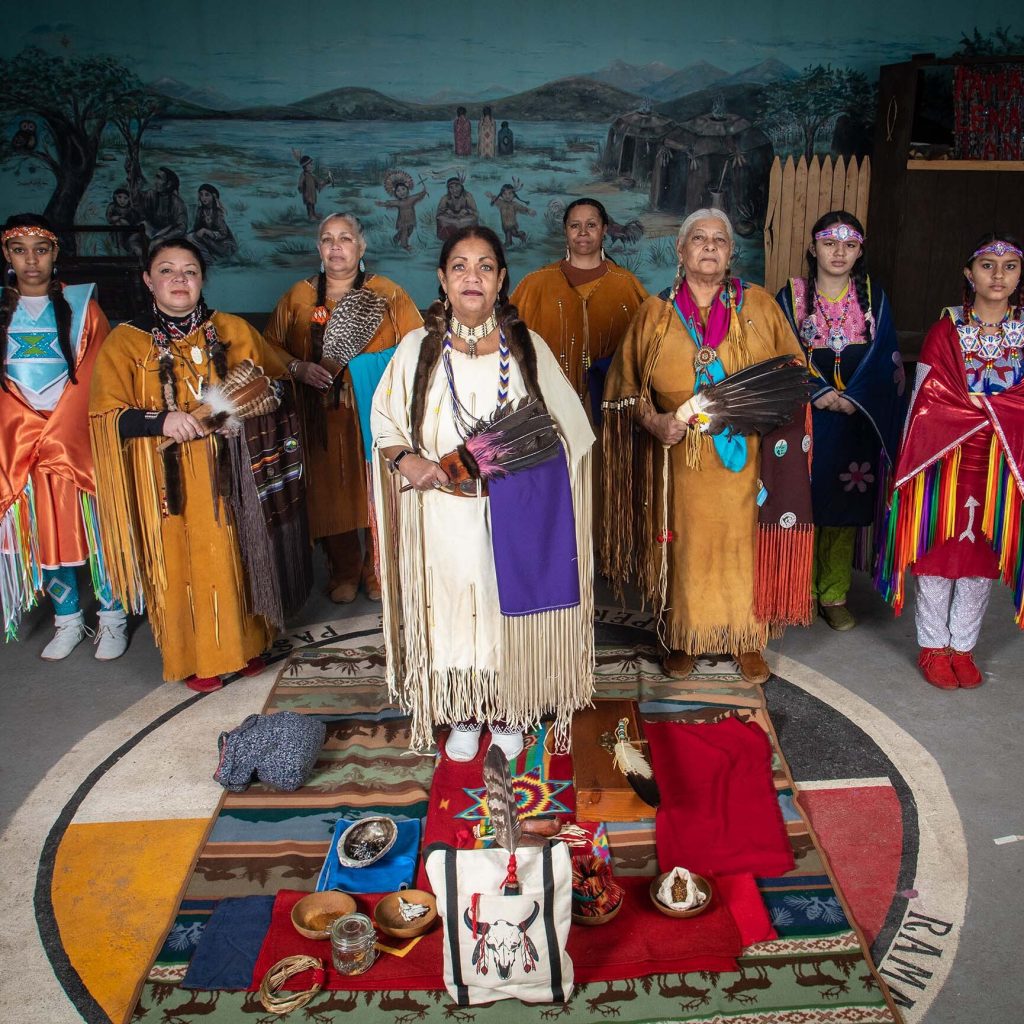
In the ancestral homelands of the Ramapough Munsee Lenape Nation, a powerful new initiative is taking root. Today, we’re honored to announce a groundbreaking partnership between the Ramapough Mountain Indians, Inc. (RMI), Turtle Island Community Capital (TICC), and Ramapo College of New Jersey to strengthen food sovereignty and resilience for the Ramapough people.
Returning to the Land: The Teaching and Learning Garden
At the heart of this collaboration is the establishment of a Community Teaching and Learning Garden on Ramapough land adjacent to 95 Halifax Road in Mahwah, NJ. This 13.63-acre property, already a significant cultural site for the Nation, will become a hub for revitalizing traditional agricultural practices and strengthening local food systems. This garden represents more than just growing food—it’s about growing sovereignty, preserving knowledge, and healing our relationship with the land.
The site carries deep significance for the Ramapough people. Currently used as a prayer ground and gathering space, it contains a stone altar and prayer circle surrounded by masked poles. In 2016, it became home to the Split Rock Sweetwater Prayer camp, established as an act of resistance against the proposed Pilgrim Pipeline that threatened Ramapough ancestral lands.
Now, this sacred space will nurture new growth through a garden that honors traditional practices while building capacity for future generations.
A Community-Centered Approach
What makes this initiative truly powerful is its deep roots in community needs and priorities. The project will unfold in four deliberate phases:
- Initial Needs Assessment: Tribal members will work alongside TICC and Ramapo College to identify priorities related to food sovereignty, current agricultural activities, and barriers to expanding beyond subsistence farming.
- Education and Capacity Building: Workshops and training programs will address key obstacles, particularly around securing funding and navigating the regulatory challenges of starting small agricultural businesses.
- Establishing the Teaching Garden: The garden will serve as a living classroom where traditional agricultural knowledge can be preserved and shared across generations.
- Multiplying Impact: The initiative will expand through grants to tribal members to establish their own community gardens or leverage their skills to launch small businesses.
The Ramapough have a long history of farming and foraging, but land loss and environmental pollution have made their food systems increasingly vulnerable. This partnership is about reclaiming that heritage and building resilience for the Ramapough people.
Building on Existing Strength
This new initiative doesn’t start from scratch. The Ramapough have been working toward food sovereignty through multiple pathways, including a food distribution program at tribal headquarters and the Munsee Three Sisters Farm in Andover, NJ, established by Turtle Clan Chief Vincent Mann in response to environmental damage from the Ringwood Mines Landfill Superfund Site.
While these efforts have been vital, they’ve faced limitations in scale, location, and long-term sustainability. The Teaching and Learning Garden will help address these challenges by creating a centralized hub for knowledge sharing, capacity building, and community engagement.
A True Partnership
For TICC, this collaboration embodies our core mission of empowering Native communities through economic sovereignty. We’re honored to serve as a capital access partner, providing project management support and engagement facilitation—roles we’re uniquely positioned to fulfill as a Native-led financial intermediary committed to tribal economic revitalization.
“It is with deep respect that we enter this partnership with the Ramapough Mountain Indians and Ramapo College,” said Alexander Sterling, CEO of Turtle Island Community Capital. “This initiative represents a powerful step toward restoring food sovereignty, environmental stewardship, and intergenerational knowledge in the ancestral homelands of the Ramapough Lenape Nation.”
Ramapo College brings valuable expertise through its ongoing collaborative relationship with the Ramapough Munsee Lenape Nation, including digital history projects and environmental research. The college’s commitment, formalized in its land acknowledgment instituted by President Cindy Jebb, includes cultivating environmental and service-related projects to focus on the needs and the gifts of the Ramapo Pass and the Nation.
Looking Forward
We anticipate that approximately 500 tribal members will be directly served by this project. But the impact extends far beyond numbers—this work is about healing, sovereignty, and cultural preservation.
The skills developed through this initiative—from securing grant funding to navigating regulatory challenges—will be transferable to other tribal priorities, including preserving Ramapough history and addressing ongoing environmental justice issues.
This announcement marks just the first step in what we envision as a transformative journey—one that honors the past while building capacity for a sovereign future. We invite you to follow along as this powerful collaboration unfolds.
Special thanks to The Ramapough Munsee Lenape Nation, Ramapough Mountain Indians, Inc., and Ramapo College of New Jersey.
To learn more about the Ramapough Munsee Lenape Nation, please visit https://ramapomunsee.net/
Turtle Island Community Capital (TICC) is dedicated to providing equitable access to financing and resources for Native entrepreneurs and LIDAC communities. Our mission is to empower native communities by fostering economic sovereignty through sustainable investments and culturally-responsive financial services.
 Turtle Island Community Capital